
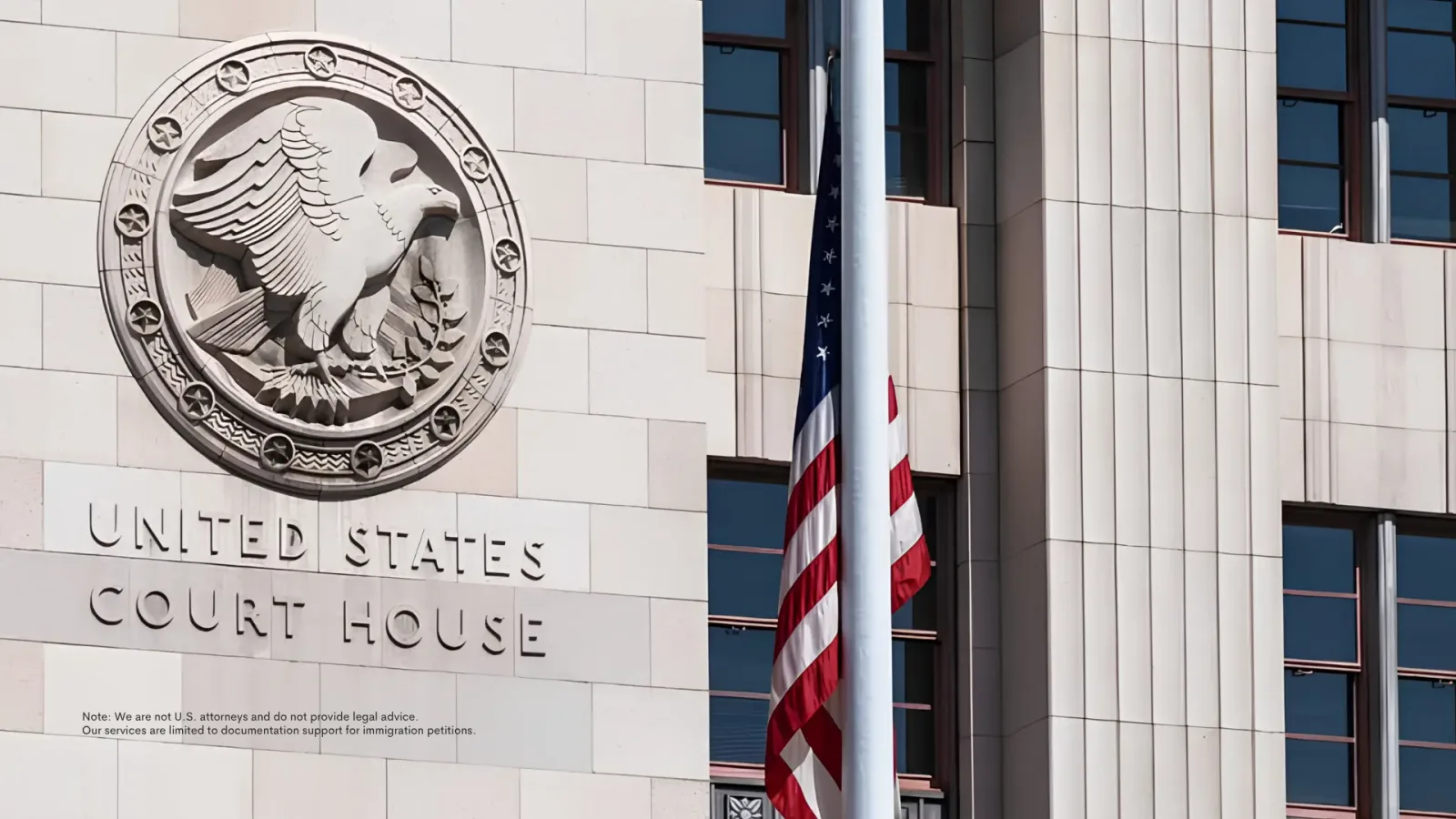
On January 14, 2026, the U.S. Department of State announced that it would pause immigrant visa issuance for nationals of 75 countries, with the policy taking effect on January 21, 2026.
Key Takeaways
A federal judge has struck down the State Department policy that suspended immigrant visa issuance for nationals of 75 countries. But what happens to affected cases now?
A separate development on August 25, 2026, has raised new concerns about immigrant visa interview scheduling worldwide.
Applicants with cases in consular processing should pay particular attention to their case status, interview notices, and communications from the relevant U.S. consulate.
The situation is still developing, so understanding what has actually changed versus what has only been reported is important before taking action.
Not sure how these developments relate to your immigrant visa case?
Schedule a consultation with NAIS
What Happened to the 75-Country Immigrant Visa Policy?
On January 14, 2026, the U.S. Department of State announced that it would pause immigrant visa issuance for nationals of 75 countries, with the policy taking effect on January 21, 2026.
The policy resulted in a suspension of immigrant visa processing for 75 countries, affecting applicants who were seeking immigrant visas through U.S. consular posts.
On August 21, 2026, the judge of the U.S. District Court for the Southern District of New York ruled against the policy in Catholic Legal Immigration Network, Inc. v. Rubio. The court found the nationality-based policy unlawful and vacated it. The ruling also set aside visa refusals that were based solely on the policy
What does that mean for applicants?
This is where applicants should be careful.
The court ruling is significant, but it should not be interpreted as a blanket statement that every affected immigrant visa case will immediately move forward.
The implementation of a court ruling by a government agency can involve additional steps. As of this article's publication date, applicants should look for instructions or updates affecting their particular case rather than assuming that the court decision alone establishes a new interview date or immediate visa issuance.
That distinction is especially important for people whose cases were already delayed, refused, or placed on hold.
What Changed on August 25?
A separate development emerged on August 25, 2026, when the State Department said it had launched a global training initiative for consular officers and that visa-service appointments would be adjusted to accommodate the training. Reuters reported that the changes include a pause affecting immigrant visa appointments worldwide.
This creates an important distinction:
The August 21 court ruling concerns the 75-country immigrant visa policy.
The August 25 development concerns immigrant visa appointment scheduling worldwide.
They should not be treated as one event.
What Should Immigrant Visa Applicants Do Now?
If you are currently waiting for an immigrant visa through consular processing, the most useful step is to determine exactly where your case stands.
If you already have an interview scheduled
Check your email and communications from the U.S. embassy or consulate handling your case.
If the appointment is postponed or changed, follow the instructions provided by the consular post.
If your case was affected by the 75-country policy
Keep records of any previous refusal, notice, or communication that identifies why your case was affected.
The court ruling specifically addressed refusals based solely on the challenged policy.
If you are waiting for an interview
Do not assume that the court ruling automatically means a new interview date has been issued.
Continue monitoring the relevant embassy or consulate for case-specific instructions.
If you are pursuing adjustment of status
The situation is different for applicants inside the United States pursuing adjustment of status, because they are not obtaining an immigrant visa through a U.S. consulate abroad.
The developments discussed here are primarily relevant to immigrant visa processing through consular posts.
What Does This Mean for Employment-Based Immigration?
The issue can also matter to people pursuing employment-based immigration from outside the United States.
For example, an employee may have an approved employment-based petition but still be waiting for the consular processing stage to be completed.
For employers, the important question is therefore not simply whether the employee is from one of the 75 countries.
It is:
Where is the employee's immigration case right now?
An employer may need to distinguish between an employee who:
is still waiting for an immigrant visa petition decision;
is waiting for visa availability;
is completing document processing;
is waiting for a consular interview; or
has already been interviewed.
The recent developments may have different implications at each stage.
If you are managing an employee's immigration process and need help understanding where the case stands, New York Area Immigration Services can help you determine what to monitor next.
What We Know and What Is Still Developing
At this point, it is useful to separate the confirmed court action from the developing administrative situation.
Development | Current information |
75-country immigrant visa policy | Vacated by the U.S. District Court for the Southern District of New York on August 21 |
Visa refusals based solely on that policy | The court ruling addressed and set aside those refusals. |
Worldwide immigrant visa appointments | The State Department has said appointments will be adjusted during global consular training. |
New interview dates | Applicants should wait for instructions from the relevant consular post rather than assume a new date. |
Immediate visa issuance for all affected applicants | Do not assume this from the court ruling alone. |
For applicants searching for information about immigrant visas for 75 countries, this distinction is important: the court ruling and the worldwide appointment changes concern different developments.
What Happens Next?
For applicants, the immediate priority is to monitor case-specific communications rather than rely on general headlines.
If your case involves the former 75-country policy, determine whether you received a refusal or other action specifically based on that policy.
If you are waiting for an immigrant visa interview, monitor the U.S. embassy or consulate handling your case for scheduling updates.
And if you are an employer sponsoring someone through an employment-based immigration process, review the employee's current stage before deciding whether the recent developments require any change in planning.
Because the situation is developing, new guidance from the Department of State or further court action could change how affected cases are handled.
Frequently Asked Questions
Does the court ruling mean applicants from the 75 countries can now receive immigrant visas?
The U.S. District Court for the Southern District of New York vacated the 75-country policy. However, applicants should not interpret the ruling by itself as confirmation that their individual case will immediately proceed or that a visa will be issued. Any subsequent government instructions remain important.
Do the 75-country ruling and worldwide appointment changes affect tourist or student visas?
No. The 75-country policy concerned immigrant visa issuance, which is used for people seeking to immigrate permanently to the United States. Tourist visas (B-1/B-2) and student visas (F-1) are nonimmigrant visas and are governed by separate visa rules. The 75-country immigrant visa policy does not itself suspend B-1/B-2 or F-1 visa issuance.
What if my immigrant visa interview has been postponed?
Follow the instructions provided by the U.S. embassy or consulate handling your case and continue monitoring for further communication. A scheduling change should not automatically be interpreted as a visa denial.
Does the 75-country immigrant visa ruling affect employment-based green card cases?
It can, but not every employment-based green card case is affected. The issue is primarily relevant to applicants pursuing an employment-based green card through consular processing outside the United States, particularly if their case was affected by the 75-country immigrant visa policy or they are waiting for an immigrant visa interview.
Have Questions About Your Immigrant Visa Case?
If your case was affected by the 75-country policy or a change in your immigrant visa appointment, review your situation and documents carefully before deciding what to do next.
Disclaimer: We are not attorneys in the U.S. Kindly do not depend upon us for legal advice. Our scope of services is limited to documentation for immigration petitions.